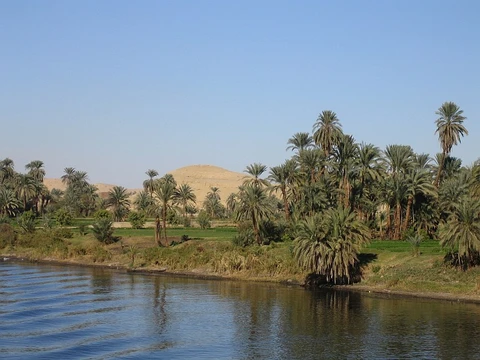
Yamuna
Second-largest tributary of the Ganges, sacred river and goddess in Hinduism.

The Yamuna is the second-largest tributary river of the Ganges by discharge and the longest tributary in India. It merges with the Ganges at Triveni Sangam, Prayagraj, a site of the Kumbh Mela, a Hindu festival held every 12 years. Like the Ganges, the Yamuna is highly venerated in Hinduism and worshipped as the goddess Yamuna.
- source
- Yamunotri Glacier, Bandarpunch peaks, Lower Himalaya, Uttarakhand
- mouth
- Triveni Sangam, Prayagraj, Uttar Pradesh
- major_tributaries
- Tons, Chambal, Sindh, Betwa, Ken
- annual_flow
- 97 billion cubic metres
- population_dependent
- Nearly 57 million people
Lore & Background
It flows through Himachal Pradesh, then into the Indo-Gangetic plains of Haryana and Uttar Pradesh, crossing states including Uttarakhand, Himachal Pradesh, Haryana, Delhi, and Uttar Pradesh. Its largest tributary is the Tons, followed by the Chambal, Sindh, Betwa, and Ken. The river helps create the highly fertile alluvial Ganges-Yamuna Doab region between itself and the Ganges. Nearly 57 million people depend on its waters, and it accounts for more than 70 percent of Delhi's water supply. At the Hathni Kund Barrage, its waters are diverted into the Western and Eastern Yamuna Canals. Below Delhi, the river becomes severely polluted due to wastewater discharge, with a 22 km stretch in Delhi accounting for nearly 80% of total pollution.
Reader's Guide
The Yamuna is significant as a major tributary of the Ganges, both hydrologically and culturally. It drains 40.2% of the Ganges Basin and supports nearly 57 million people, providing over 70% of Delhi's water supply. Its annual flow is 97 billion cubic metres, with 4 billion consumed yearly, mostly for irrigation. The river is highly venerated in Hinduism, worshipped as the goddess Yamuna, daughter of the sun god Surya and sister of Yama, the god of death. Bathing in its sacred waters is believed to free one from the torments of death. The Triveni Sangam at Prayagraj, where it meets the Ganges, is a site of the Kumbh Mela. The river's water quality is reasonably good until the Wazirabad barrage in Delhi, after which pollution from wastewater becomes severe. The river also defines state borders and its alluvial plain supports one-third of India's population through agriculture, particularly basmati rice cultivation.
Did You Know?
- The Yamuna is the longest tributary in India and the second-largest by discharge.
- It is worshipped as the goddess Yamuna, daughter of the sun god Surya and sister of Yama, the god of death.
- A 22 km stretch of the Yamuna in Delhi accounts for nearly 80% of the total pollution in the river.
- The present Sarsuti river is a palaeochannel of the Yamuna, which changed course due to plate tectonics.
Frequently Asked Questions
What is the Yamuna?
The Yamuna is the second-largest tributary of the Ganges by water discharge and the longest tributary river in India. It flows from the Lower Himalaya in Uttarakhand southward into Uttar Pradesh, where it joins the Ganges.
Where does the Yamuna start and where does it end?
The river originates at the Yamunotri Glacier near the Bandarpunch peaks in the Lower Himalaya of Uttarakhand. It reaches its mouth at the Triveni Sangam in Prayagraj, Uttar Pradesh, where it merges with the Ganges.
Why is the Yamuna considered sacred in Hinduism?
In Hindu tradition the Yamuna is revered as a goddess and worshipped with devotion comparable to that shown to the Ganges. Her confluence with the Ganges at Prayagraj anchors the Kumbh Mela, a major pilgrimage festival held once every twelve years.
Which major tributaries feed into the Yamuna?
Several significant rivers join the Yamuna along its course, including the Tons, Chambal, Sindh, Betwa, and Ken. Together they help sustain an annual flow of roughly 97 billion cubic metres of water.
How many people depend on the Yamuna?
Nearly 57 million people rely on the Yamuna for drinking water, irrigation, and other daily needs. This makes it one of the most critically important waterways in northern India.
More in Rivers Of The World 1-20
Spotted an error? Know more?
This is a living reference — every entry is fact-audited, and reader corrections feed straight into our audit queue. Suggest an edit · See this site's audit record