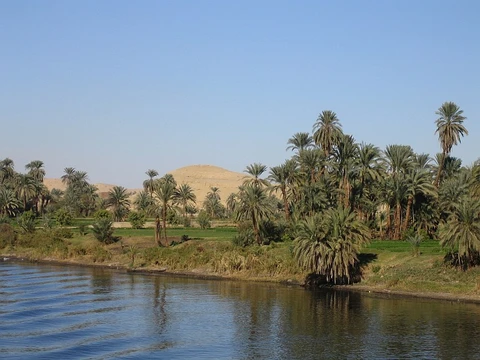
Missouri River
Longest U.S. river, key to westward expansion and Native American history.

via Wikipedia: Missouri River · see source
The Missouri River is the longest river in the United States, rising in the eastern Centennial Mountains of the Bitterroot Range of the Rocky Mountains of southwestern Montana. It flows east and south for 2,341 mi (3,767 km) before entering the Mississippi River north of St. Louis, Missouri. The river drains a semi-arid watershed of more than 500,000 sq mi (1,300,000 km2), which includes parts of ten U.S. states and two Canadian provinces. Although a tributary of the Mississippi, the Missouri River is slightly longer and carries a comparable volume of water. A fellow tributary, the Ohio River, carries more water.
- length
- 2,341 mi (3,767 km)
- source
- Eastern Centennial Mountains, Bitterroot Range, Rocky Mountains, Montana
- mouth
- Mississippi River north of St. Louis, Missouri
- watershed_area
- 529,350 sq mi (1,371,000 km²)
- major_tributaries
- Yellowstone, Platte, Kansas, Osage, Milk, James, Cheyenne
- number_of_mainstem_dams
- 15
- largest_reservoirs
- Lake Sakakawea, Lake Oahe, Fort Peck Lake
Lore & Background
For over 12,000 years, people have depended on the Missouri River and its tributaries as a source of sustenance and transportation. More than ten major groups of Native Americans populated the watershed, with most leading a nomadic lifestyle and dependent on enormous bison herds that roamed through the Great Plains. The first Europeans encountered the river in the late seventeenth century, and the region passed through Spanish and French hands before becoming part of the United States through the Louisiana Purchase. The Missouri River was one of the main routes for the westward expansion of the United States during the 19th century. The growth of the fur trade in the early 19th century laid much of the groundwork as trappers explored the region and blazed trails. Pioneers headed west en masse beginning in the 1830s, first by covered wagon, then by the growing numbers of steamboats that entered service on the river. Conflict between settlers and Native Americans in the watershed led to some of the most longstanding violence of the American Indian Wars.
Reader's Guide
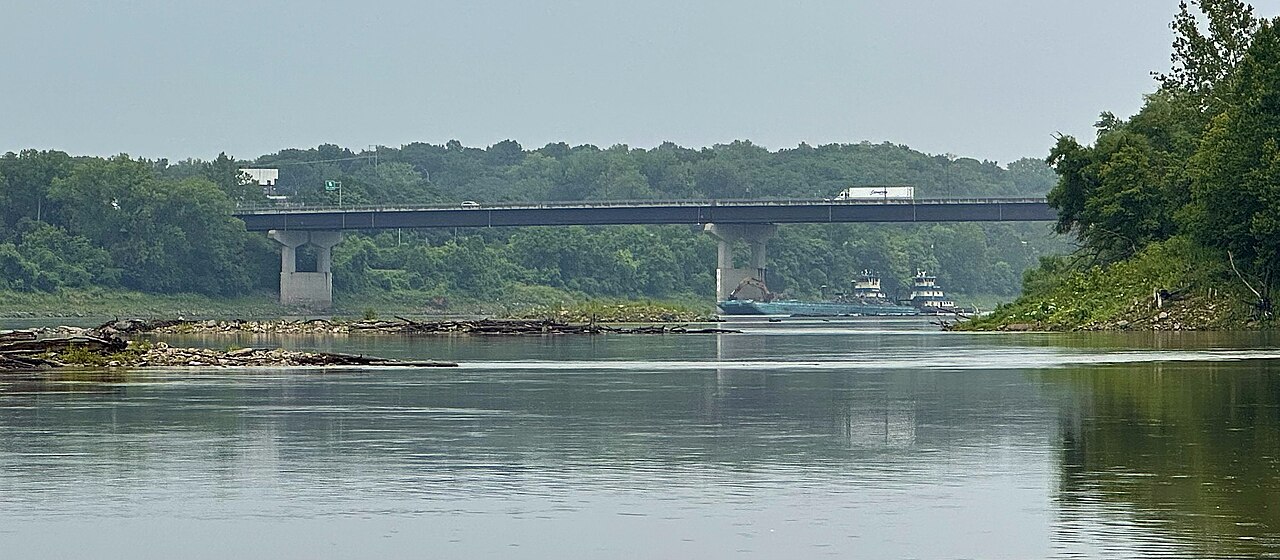
The Missouri River officially starts at the confluence of the Jefferson and Madison in Missouri Headwaters State Park near Three Forks, Montana, and is joined by the Gallatin a mile (1.6 km) downstream. It then passes through Canyon Ferry Lake, a reservoir west of the Big Belt Mountains. Issuing from the mountains near Cascade, the river flows northeast to the city of Great Falls, where it drops over the Great Falls of the Missouri, a series of five substantial waterfalls. It then winds east through a scenic region of canyons and badlands known as the Missouri Breaks, receiving the Marias River from the west then widening into the Fort Peck Lake reservoir a few miles above the confluence with the Musselshell River. Farther on, the river passes through the Fort Peck Dam, and immediately downstream, the Milk River joins from the north. Flowing eastward through the plains of eastern Montana, the Missouri receives the Poplar River from the north before crossing into North Dakota where the Yellowstone River, its greatest tributary by volume, joins from the southwest. At the confluence, the Yellowstone is actually the larger river. The Missouri then meanders east past Williston and into Lake Sakakawea, the reservoir formed by Garrison Dam. Below the dam the Missouri receives the Knife River from the west and flows south to Bismarck, the capital of North Dakota, where the Heart River joins from the west. It slows into the Lake Oahe reservoir just before the Cannonball River confluence. While it continues south, eventually reaching Oahe Dam in South Dakota, the Grand, Moreau and Cheyenne Rivers all join the Missouri from the west. The Missouri makes a bend to the southeast as it winds through the Great Plains, receiving the Niobrara River and many smaller tributaries from the southwest. It then proceeds to form the boundary of South Dakota and Nebraska and is joined by the James River from the north. At Sioux City the Big Sioux River comes in from the north, after which the Missouri forms the Iowa–Nebraska boundary. It flows south to the city of Omaha where it receives its longest tributary, the Platte River, from the west. Downstream, it begins to define the border between the states of Nebraska and Missouri, then flows between the states of Missouri and Kansas. The Missouri swings east at Kansas City, where the Kansas River enters from the west, and so on into north-central Missouri. To the east of Kansas City, the Missouri receives, on the left side, the Grand River. It passes south of Columbia and receives the Osage and Gasconade Rivers from the south downstream of Jefferson City. The river then rounds the northern side of St. Louis to join the Mississippi River on the border between Missouri and Illinois.
Did You Know?
- The Missouri River is slightly longer than the Mississippi River, though it is a tributary of the Mississippi.
- The Missouri River's reservoirs include the largest, second-largest, and fourth-largest artificial lakes in the United States by surface area: Lake Sakakawea, Lake Oahe, and Fort Peck Lake.
- Channelization has reduced the Missouri River's length by almost 200 mi (320 km) from pre-development times.
- The Missouri accounts for 45 percent of the annual flow of the Mississippi past St. Louis, and as much as 70 percent in certain droughts.
- At the confluence of the Missouri and Yellowstone Rivers, the Yellowstone is actually the larger river.
Gallery
Frequently Asked Questions
Who is Missouri River?
The Missouri River is the longest waterway in the United States, stretching 2,341 miles from its headwaters in Montana's Rocky Mountains to its confluence with the Mississippi north of St. Louis. It drains a vast semi-arid basin spanning ten states and two Canadian provinces.
What are Missouri River's powers/role?
The river has served as a lifeline for human communities for over 12,000 years, shaping Native American cultures, enabling westward expansion, and driving economic development across its watershed. It carries water from major tributaries such as the Yellowstone, Platte, and Kansas rivers before joining the Mississippi.
How does Missouri River's story end?
The river's journey concludes where it meets the Mississippi River just north of St. Louis, Missouri, merging into a far larger waterway. Along the way, fifteen mainstem dams have been built to regulate its flow.
Why is Missouri River important?
As the longest river in the country, the Missouri anchors the history of westward settlement and remains a critical resource for agriculture, transportation, and recreation across its 529,350-square-mile drainage basin. It has been central to the lives of countless Native American nations and later European-American settlers.
Where does Missouri River begin?
The river originates in the Eastern Centennial Mountains of the Bitterroot Range in southwestern Montana, within the Rocky Mountains. From there it winds eastward and southward across the Great Plains before reaching the Mississippi.
More in Rivers Of The World 1-20
Spotted an error? Know more?
This is a living reference — every entry is fact-audited, and reader corrections feed straight into our audit queue. Suggest an edit · See this site's audit record